Warning Signs Your Commercial Building Is Due for Duct Cleaning
Most buildings give clear hints before ducts become a real problem. These are the signals facility teams should not ignore.
October 21, 2026 · 4 min read
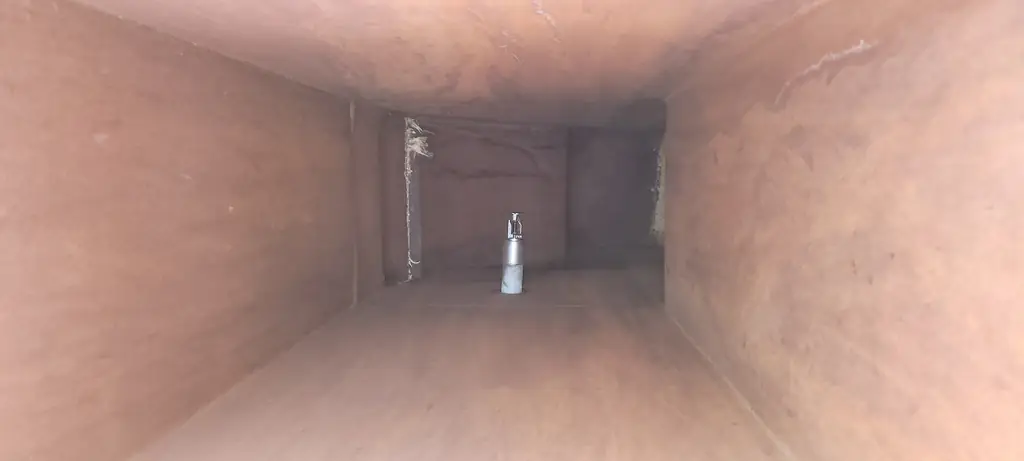
Ductwork hides above ceilings and behind walls, so it rarely gets attention until something goes wrong. In a commercial building, though, the system works every day the doors are open, and what collects inside it eventually shows up in places people can see and feel. If you manage an office, school, hospital or apartment complex, the signs below are worth checking for during your routine walk-throughs.
Visible dust and debris around vents
The easiest sign to spot is on the surface. Dust that returns quickly after cleaning, gray or black streaks on the ceiling near a diffuser, and grit on desks beneath a supply register all suggest the air is carrying particles out of the ductwork. Take a flashlight and look through a return grille. A heavy, furry layer of dust on the inside of the duct is a strong signal that the run has not been cleaned in a long time.
Odors that come and go with the system
A stale, musty or burnt smell that appears when the system starts, or when the heat first kicks on for the season, is worth taking seriously. Odors from ducts can come from accumulated organic debris, moisture in a poorly draining unit, or residue that warms up and releases smell when air starts to move. If the smell is stronger in certain rooms, the problem is likely in the branch serving them.
Uneven temperatures and weak airflow
Tenants who complain about a room that is always cold or always stuffy are often describing an airflow problem. Debris restricts the duct, a clogged coil blocks the air path, and the blower works harder to push the same volume. You may notice a register that used to blow strongly and now barely moves paper, or a conference room that never matches the thermostat setting.
More allergy complaints than usual
If staff, students or residents report sneezing, itchy eyes or congestion that clears up when they leave the building, the air may be moving irritants around. Dust, fibers and other particles that settle in ducts can be redistributed every time the fans start. A cleaning will not diagnose a medical condition, but it removes one common source from the list.
Rising energy use and equipment that runs constantly
When the system has to work harder to deliver the same comfort, the utility bill tends to show it. Fans that run longer, coils that struggle to transfer heat and filters that load up quickly are all connected. Maintenance staff may also notice more service calls, more filter changes, or components that wear faster than expected. Cleaning the pathway and the equipment can help the system run the way it was designed to.
Other triggers worth acting on
- A renovation, demolition or tenant buildout, which leaves construction dust inside the ducts
- A water leak or flood that reached ceiling spaces or equipment rooms
- A new owner or property manager who does not have a cleaning history on file
- Visible mold or moisture staining near a register, coil or access panel
- Pest activity, such as droppings or nesting material found at a vent opening
A quick walk-through checklist
- Look at three or four supply diffusers on different floors for dust streaking
- Shine a light into a return grille and note how much buildup you can see
- Open an access panel on an air handling unit and check the coil face
- Ask your front desk or tenants what comfort and odor complaints keep repeating
- Compare this winter's heating bills and service calls with last year's
None of these checks replaces a professional inspection, but together they tell you whether to schedule one now or at your next maintenance window.
How scheduling works so your building keeps running
The biggest worry for most managers is disruption. Cleaning crews do not need to work while tenants are at their desks. Work can be scheduled overnight, in the early morning or on weekends, with the crew moving through the building in sections so occupied areas stay in service. A hospital, school or hotel can plan the work around its own quiet hours.
The cleaning itself can use pressure washing, coil cleaning and inline cleaning methods, depending on what is inside your system. Time on site depends on the size of the building. A smaller facility may take a few hours, and a large multi-floor building will take longer. Cost depends on building size, duct configuration and system complexity, so the practical first step is a free quote after the company has the details.
What to have ready when you call
- Approximate square footage and number of floors
- The type and number of air handling units
- Which symptoms you have seen and where in the building
- Hours when the building is empty or lightly occupied
- Any renovation or water event in recent history
Metro Cleaning Service, Inc. has cleaned commercial and industrial ventilation systems across the Twin Cities since 1968, and we are licensed, bonded and insured. Read more about our air duct cleaning service at /services/air-duct-cleaning, or call (651) 484-9799 to talk through what you are seeing.
Metro Cleaning Service, Inc., (651) 484-9799
Call (651) 484-9799More articles
Air Duct Cleaning vs. Full HVAC Cleaning: Which One Does Your Building Need?
Duct work is one part of a ventilation system. Here is how to tell when the ducts alone are enough and when the whole system needs attention.
Commercial Kitchen Exhaust Cleaning: What Gets Cleaned, Start to Finish
Grease does not stay at the hood. It travels the whole exhaust path, and so should the cleaning.