Restrooms
Restroom exhaust fans and ducts, cleared of dust and moisture
Fans, grilles and ducts cleaned so restroom air leaves the building instead of settling into the ceiling.
The fan above the ceiling tile is working harder than it looks
A restroom exhaust system has one job: carry humid, stale air out of the building. Over time the fans and ducts collect dust, debris and microbial growth, and each layer slows the air a little more. The fan has to push against its own buildup, the motor runs warmer, and the room starts to hold what it was supposed to release.
The first signs are small. Condensation on mirrors and ceilings, odors that outlast the cleaning crew, a fan that has gone louder than it used to be. Left alone, the moisture works on the building itself: mildew, warped drywall and peeling paint, plus a fan that can fail early because it has been straining for years.
Busy buildings feel it fastest. Offices, gyms, schools and healthcare facilities put a lot of traffic through a restroom in a day, and the ventilation behind the ceiling is what keeps up with it.
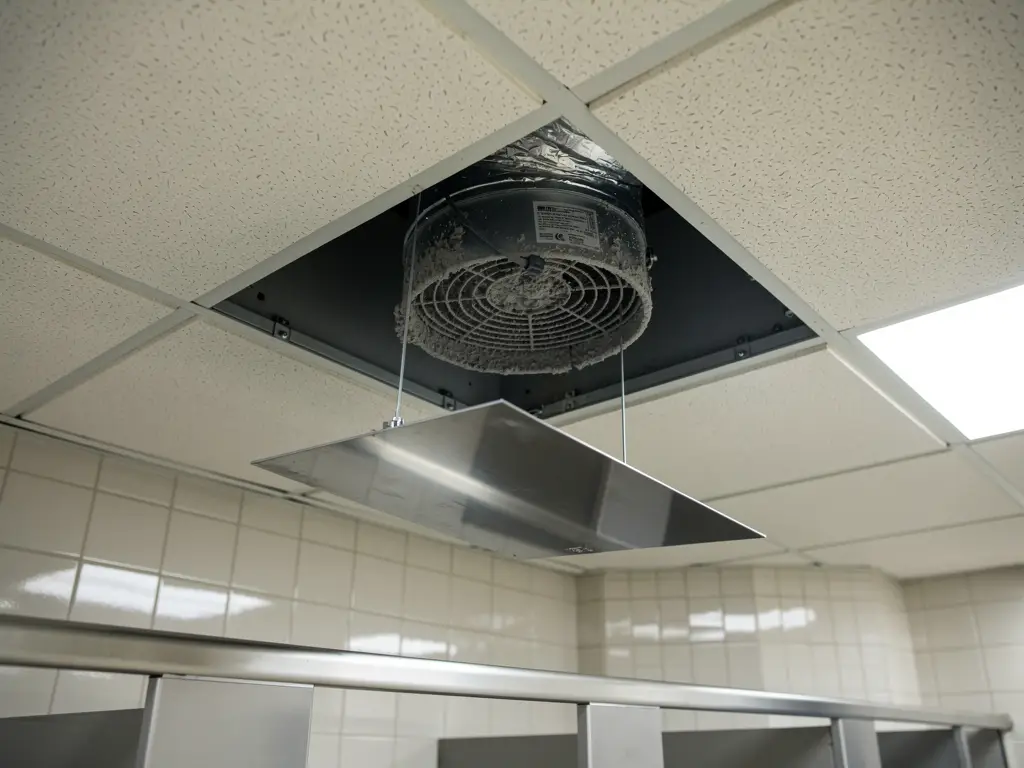
Commercial restroom ceiling with the exhaust grille lowered and a dusty inline exhaust fan above
Grille, fan and the duct run behind it
We clean the whole path, not just the part you can see from the floor. That starts at the grille, continues through the fan and covers the duct that carries the air out of the building. A clean grille over a clogged fan fixes nothing, so the work follows the airflow to where it leaves.
Whether you manage a facility with dozens of restrooms or a small building with heavy daily use, the approach scales. We plan the visit so staff, tenants and customers see as little of it as possible, and we can work in a single pass or return on a regular maintenance schedule, whichever suits the building.
Restroom exhaust usually ties into the same mechanical rooms and rooftops as the rest of the ventilation. If a building has gone years without attention, it is reasonable to look at the air handlers and the main duct runs on the same visit.
Fresh air, dry ceilings and a system that stays in code
When restroom air moves the way it was designed to, odors clear on their own, moisture leaves instead of settling into finishes, and cleaning staff spend less time fighting the room. Fans that no longer strain draw less power, which is a quiet saving across a building with many restrooms.
Regular service also helps a system stay code-compliant, especially in high-use restrooms. Not sure when yours was last cleaned? We will look it over and walk you through the next step, and every quote is free and priced for your building.
Metro Cleaning Service, licensed, bonded and insured, serving the Twin Cities since 1968. Call (651) 484-9799.
What the ceiling is telling you
Four symptoms, one cause. Each one points to the same exhaust path, and each one has a plain fix.
- Moisture
- Condensation on mirrors and ceilings means humid air is not leaving. We clear the fan and duct so it does.
- Mildew
- Patches and musty smells follow trapped moisture. Cleaning the path removes the buildup that holds it.
- Odor
- Smells that linger past the cleaning crew mean slow airflow. Restoring the fan restores the draw.
- Code
- A clogged system can drift out of compliance. Regular cleaning helps it stay where it should.
Restroom fans are one branch of the building’s ventilation. The main supply and return runs are covered under commercial air duct cleaning, and the units that move that air are handled in air handling unit and coil cleaning.