Commercial Kitchen Exhaust Cleaning: What Gets Cleaned, Start to Finish
Grease does not stay at the hood. It travels the whole exhaust path, and so should the cleaning.
October 21, 2026 · 3 min read
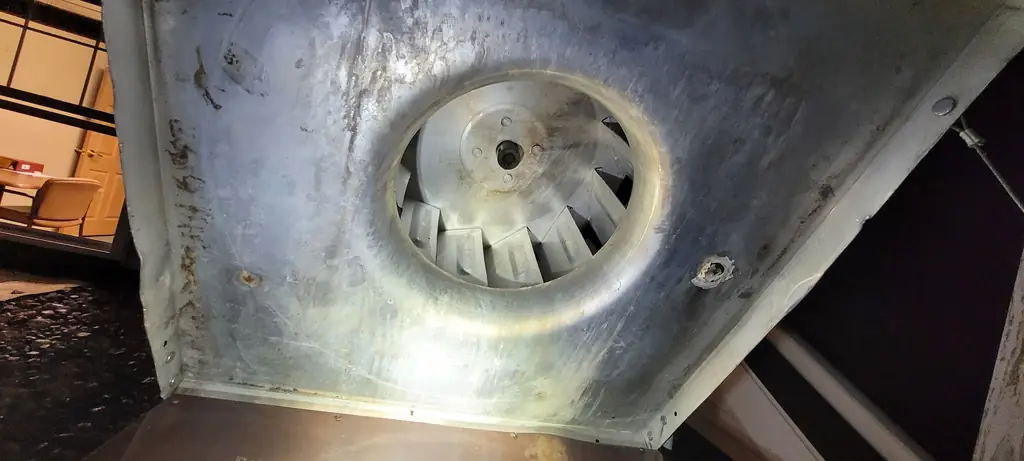
Every time a cook fires up the flattop or fryer, a fine mix of grease vapor, smoke and heat gets pulled into the exhaust hood. Some of it condenses on the filters. Much of it keeps traveling, cooling as it goes, and sticks to the inside of the duct all the way to the roof fan. For restaurant owners and kitchen managers, understanding that path is the difference between a surface cleaning and one that actually reduces risk.
Why grease buildup is a fire risk
Grease is fuel. A layer on the inside of a duct is out of sight and out of mind, but if a flare-up in the cooking line reaches that layer, fire can travel through the duct and into other parts of the building. The more buildup, the more fuel is available. This is the main reason kitchen exhaust cleaning is treated seriously by insurers, fire inspectors and landlords alike. Your own insurance carrier and local fire authority can tell you what they expect for your kitchen.
Grease also affects daily operation. A fouled exhaust path moves less air, so the kitchen runs hotter, smells stronger and pulls smoke into the dining room instead of out through the roof.
The full exhaust path a cleaning should reach
Think of the system as a line that starts above the cooking equipment and ends on the roof. A thorough cleaning follows that line.
- Hood canopy: the interior surfaces, the lip and the collection trough where grease drips
- Baffle filters: removed, degreased and reinstalled, since these are the first line of defense
- Plenum: the space behind the filters where vapor concentrates before entering the duct
- Grease duct: the horizontal and vertical runs that carry exhaust to the roof, which collect the heaviest residue at elbows and low points
- Exhaust fan: the blades and housing on the roof or at the duct terminus, where buildup can unbalance the fan and drip onto the roof
- Make-up air system: the fresh air supply that replaces what the hood removes, which collects dust and grease film of its own
- Dishwasher exhaust: the steam and moisture vent, often overlooked, which can hold residue and promote odors
If a bid mentions only the hood and filters, ask whether the duct and fan are included. Cleaning the part you can see while leaving the part you cannot is a common gap.
Floors, walls and equipment
Degreasing a hood sends water and cleaner into the kitchen, and grease from the work area gets on nearby surfaces. A complete visit includes cleaning the surrounding floors, walls, ceilings and cooking equipment after the exhaust system is done, so the crew leaves the kitchen ready for the next day. Metro Cleaning Service, Inc. handles exhaust, grease systems, hoods, ducts, equipment, dishwasher exhaust and make-up air systems as one job.
Why after-close cleaning works best
A kitchen cannot cook while the hood is being cleaned. The hood is shut off, the area is covered, and the crew uses water, cleaner and tools that make a mess. Doing the work after close means no lost service, no customers in the way and a kitchen that is ready for prep in the morning. Many restaurants schedule overnight, and weekends also work for places that close one day a week.
How to prep your kitchen for the crew
- Finish cooking and let fryers, grills and burners cool down fully
- Turn off and clear the cooking line, then remove food, utensils and small equipment from under the hood
- Cover or move anything that could be damaged by water and cleaner
- Make sure the crew can reach the rooftop fan and any duct access panels
- Tell the crew about any equipment that is unusual, recently repaired or currently out of service
- Leave a contact number for questions if the manager is not on site overnight
Questions to ask before you book
- Does the scope include the duct and fan, or only the hood and filters?
- Will the crew clean the surrounding floors, walls and equipment?
- Are the dishwasher exhaust and make-up air included?
- Can the work be done after close or on a weekend?
- Is the company licensed, bonded and insured?
A cleaning that reaches the whole path leaves the cooks working in a sanitized space they can appreciate, with better airflow and less grease sitting where it can do harm. Metro Cleaning Service, Inc. has served Twin Cities kitchens from Saint Paul since 1968. See our kitchen exhaust and hood cleaning service at /services/kitchen-exhaust-hood-cleaning, or call (651) 484-9799 for a free quote based on your kitchen and exhaust layout.
Metro Cleaning Service, Inc., (651) 484-9799
Call (651) 484-9799More articles
Air Duct Cleaning vs. Full HVAC Cleaning: Which One Does Your Building Need?
Duct work is one part of a ventilation system. Here is how to tell when the ducts alone are enough and when the whole system needs attention.
Warning Signs Your Commercial Building Is Due for Duct Cleaning
Most buildings give clear hints before ducts become a real problem. These are the signals facility teams should not ignore.